Change Language :
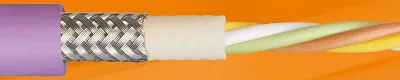
CAN bus cable for moving applications
Reduce downtimes with CAN bus cables
CAN bus (Controller Area Network) is a field bus system developed by Bosch, which was introduced in 1986 together with Intel. The aim was to reduce the number of wiring harnesses in vehicles in order to save costs and weight. Over time, various CAN protocols have become established, especially in safety-relevant areas. Thus, the CANopen protocol was introduced for automation technology in 1994, also under the Bosch management.
Areas of application for CAN bus cables
CAN bus is primarily used in automation technology. CAN bus systems can also be found in industrial vehicles, e.g. forklifts or aerial work platforms.


Cables for CAN bus applications from igus For applications in the energy chain, however, it is necessary to use CAN bus cables with fine stranded conductors. In addition, a cable structure adapted to the movement in the energy chain is necessary to ensure reliable data transmission for years to come. Cables from chainflex have therefore established themselves especially in systems and machines such as robots, packaging machines, production machines and machine tools.
The chainflex cable product range from igus offers a large number of CAN bus cables. A total of 13 different CAN bus cable types from seven different cable families are available for different areas of application. All chainflex CAN bus cables have been developed for permanent movement in the energy chain. Depending on the requirements, you can choose between different PVC, PUR and TPE outer jackets. The various bus cable series offer different performance levels, so that the right cable can be selected for every application to achieve the longest possible service life. All chainflex CAN bus cables have one thing in common. All chainflex cables are subject to the same quality standards. It does not matter whether it is a cost-effective cable of the CF888 family or a cable for the highest demands and smallest bend radius, as is the case with the CFBUS.LB family. For this reason, igus SE & Co. KG also provides a 36-month functional guarantee on all chainflex CAN bus cables with a service life of up to 10 million double strokes.
Transmission lengths The issue of the maximum transmission length of bus cables is often underestimated. Caution is generally advised here, as the maximum cable length can depend heavily on the type of cable. A cable for fixed installation always has a lower attenuation than flexible cables, which are designed for permanent movements. This means that the transmission length is shorter than with a fixed installation cable.
Depending on the cable family, chainflex CAN bus cables are mechanically designed for travels of up to 400m and more, but the data rate of the bus system decreases with increasing cable length. With fixed installation, up to 500m can be achieved with copper cables. In this case, however, the maximum transmission speed is 125kbit/s, whereas a data transmission rate of 1Mbit/s is still possible with a cable length of 40 metres. In the case of highly flexible CAN bus cables for the energy chain, however, our experience shows that a cable length can be significantly shorter. Depending on the transmission speed, up to 50 metres are possible for a moving CAN bus cable. However, this length can vary upwards and downwards depending on the environmental conditions and application requirements.
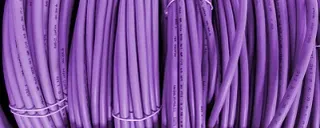
Sold by the metre or harnessed
chainflex CAN bus cables can be ordered classically as sold by the metre on drum or cable ring from 1m order length without cutting charge and minimum quantity surcharges. In addition, igus also offers these cables as harnessed readycable. Each chainflex PROFINET cable can therefore be ordered in a desired length, no minimum quantity. You can choose between different cables and connectors in the readycable online shop. A filter function helps you to select the right type.
Consulting
I look forward to answering your questions
OEM Finland OY+358 207499499Write e-mail
Shipping and consultation
In person:
Monday to Friday from 7 am - 17 pm.
Saturdays from 8 am- 12 pm.
Online:
24h
WhatsApp-Service:
Montag – Freitag: 8 – 16 Uhr