Change Language :
Wear-resistant 3D printing plastics for components in moving applications
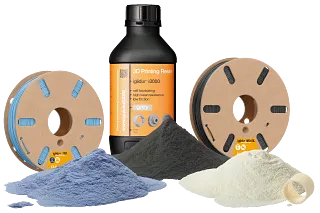
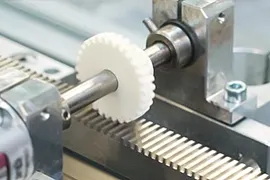
Our 3D printing materials are up to 50 times more abrasion-resistant than conventional plastics. This makes them the ideal material wherever components come into contact through movement. On this page you can find out which materials fulfil special requirements, e.g. food conformity or ESD suitability requirements.
In our shop you will find detailed technical information and processing instructions for all our 3D printing materials. For easy processing of our filaments on standard 3D printers from Bambu Lab, Prusa and Ultimaker, additional material profiles are available for download.
What do the iglidur plastics have in common?
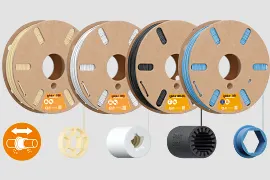
All iglidur materials contain the same basic materials specifically developed for plain bearings. This means that they are all self-lubricating and wear-resistant thanks to integrated solid lubricants. More details on the specifications of the iglidur base materials can be found in the plain bearing wiki.
All-rounder materials
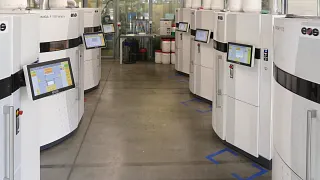
The iglidur 3D printing materials are considered all-rounders that can be used for any type of wear application under normal conditions.
The bestsellers here are the SLS powder iglidur i3 and the tribofilament iglidur i150.
If, however, your application requires an all-rounder material with significantly higher flexural strength and/or temperature resistance, iglidur i230 is the right material.

Heat-resistant materials
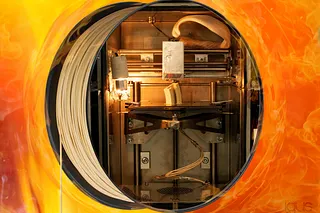
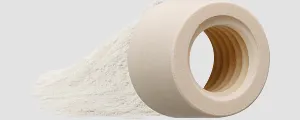
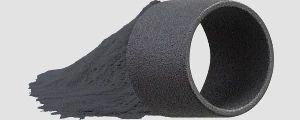
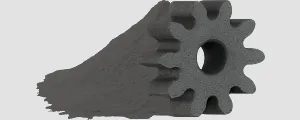
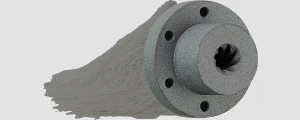
This category includes 3D printing materials that can withstand a permanent application temperature of at least 120°C (without deforming): For such higher application temperatures, we offer wear-resistant tribofilaments and SLS powders.
What do I need to bear in mind when processing heat-resistant tribofilaments?
- To process high-temperature filaments, you need a 3D printer with a build chamber temperature of at least 160°C.
- It is particularly important to store the high-temperature filaments protected from moisture and to dry them before use in order to avoid undesirable quality problems.
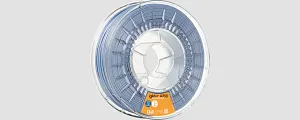
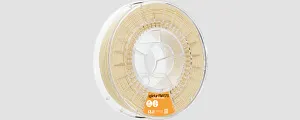
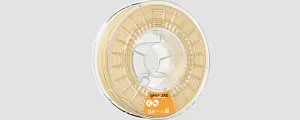
Materials that are suitable for ESD

Food-safe materials
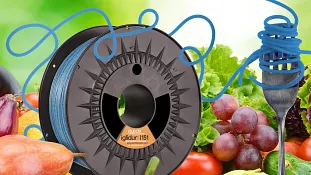
For safe use in the food and packaging industries, we offer iglidur filaments that comply with FDA and EU 10/2011. They guarantee adherence to statutory limits for direct product contact.
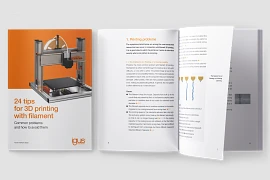
For optimal print results and hygienic, dense surfaces, thorough cleaning of the extruder, dust-free bearings and matching slicing settings (e.g. customised line width) are crucial.


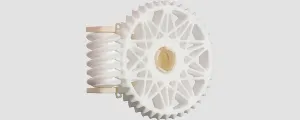
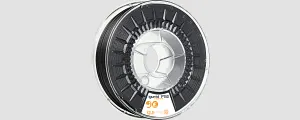
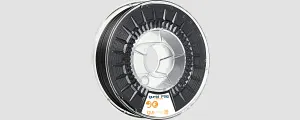
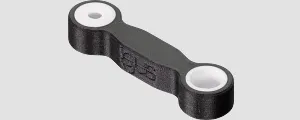
Materials for structural components and multi-material printing
DLP and LCD resin
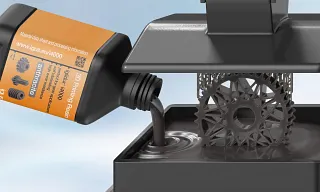
The iglidur 3D printing resins particularly stand out from conventional resins due to their enormous wear resistance and maximum strength.
Thanks to the integrated solid lubricants, they are self-lubricating and are particularly suitable for the production of wear-resistant parts with the finest details.
Like the other igus 3D printing materials, the resins are also processed to order in the in-house 3D printing service. They are also available as material in the shop and can be easily processed on standard DLP and LCD 3D printers.
Tip: Our print profiles for Asiga and Formlabs 3D printers make the printing process even easier. Simply download it free of charge from the product page in the shop and start printing straight away.


Our materials at a glance
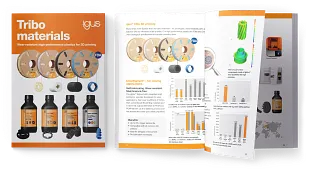
This brochure offers assistance in the selection and application of our wear-resistant tribo-materials, explains the advantages of the special filaments and 3D printing resins from igus, as well as specific application possibilities.
Just fill in the form, download the PDF and discover the materials!
Consulting
I look forward to answering your questions
OEM Finland OY+358 207499499Write e-mail
Shipping and consultation
In person:
Monday to Friday from 7 am - 17 pm.
Saturdays from 8 am- 12 pm.
Online:
24h
WhatsApp-Service:
Montag – Freitag: 8 – 16 Uhr